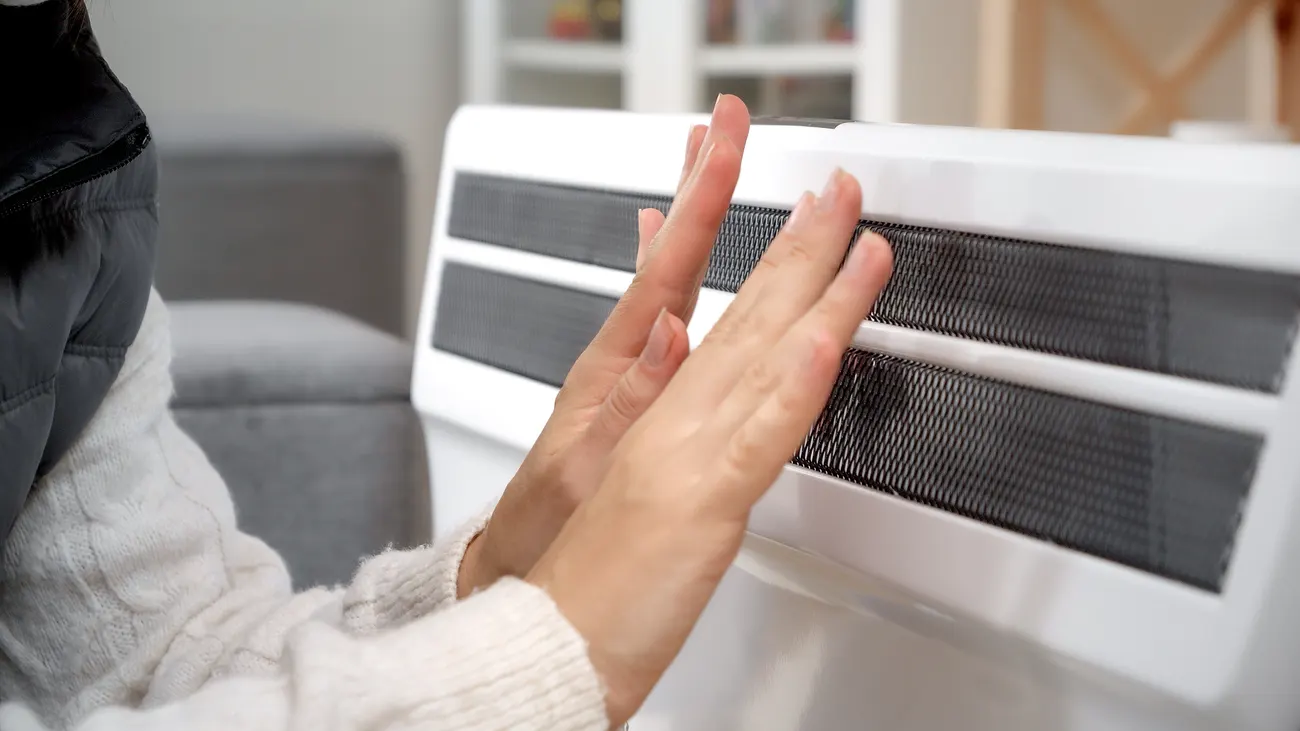
Every Northwest Indiana winter, the same complaints roll in. Waking up with a dry throat. Static shocks off every doorknob. Lips and knuckles that crack no matter how much lotion you use. Wood floors and trim that develop little gaps. A piano or guitar that will not stay in tune. If that is your house from December through March, you are not imagining it, and the thermostat is not the problem. Your air is too dry.
The good news: this is one of the most fixable comfort problems there is, once you understand what is actually happening.
Why winter air is so dry indoors
It comes down to a bit of physics. Cold air simply cannot hold much moisture. When frigid outdoor air, which already carries very little water, leaks into your home and your furnace heats it up, the relative humidity plummets. You are essentially heating desert-dry air.
The EPA recommends keeping indoor relative humidity roughly between 30 and 50%. In a hard NWI freeze, aiming for the lower-middle of that, around 35 to 40%, keeps you comfortable without fogging up cold windows. Interestingly, this is the mirror image of the summer problem, where the air is too humid and sticky; we covered that in Why Your House Feels Sticky Even When the AC Is Running.
Why dry air is more than a comfort issue
It is tempting to just tough it out, but chronically dry air quietly costs you:
- Your health and comfort. Dry sinuses and throats, cracked skin, itchy eyes, and more nosebleeds. Dry airways can also make winter colds feel worse.
- Your home. Hardwood floors, trim, doors, and furniture shrink and crack when the air pulls moisture out of them. That is where those winter gaps and squeaks come from.
- Your stuff. Static electricity is not just annoying, it can damage electronics. Instruments drift out of tune. Houseplants struggle.
- Your heating bill. Humid air holds heat and feels warmer, so a properly humidified home often feels comfortable at a slightly lower thermostat setting.
The quick wins (that only go so far)
Before we talk equipment, there are things that genuinely help, and they mostly come down to keeping the moisture you have and not making the problem worse:
- Seal the air leaks. Every gap that lets cold, dry outdoor air in makes the problem worse. Sealing up your home, which you should do for heat-loss reasons anyway, also slows how fast your indoor air dries out. See Where Your Heat Escapes.
- Run bathroom fans less aggressively in winter (you are venting humid air you actually want).
- Portable humidifiers in a bedroom or office can make one room livable.
- Everyday moisture: houseplants, air-drying laundry, leaving the bathroom door open after a shower. Small help, but real.
The honest limitation: portable humidifiers treat one room, need refilling constantly, and can breed mildew if you do not clean them. For a whole house, they are a bandage.
The real fix: a whole-home humidifier
The proper solution to a dry house is a whole-home humidifier installed right on your furnace. As your heating system circulates warm air through the ductwork, the humidifier adds a controlled amount of moisture to that air, so every room stays in a comfortable range automatically. You set a target humidity, much like you set a temperature, and forget about it. No tanks to refill, no single-room limits.
Because it is integrated with your HVAC system and ductwork, a whole-home humidifier is something we handle as part of your home’s indoor air quality setup, alongside options like the HALO-LED whole-home purifier for cleaner air year-round. It is a modest addition to a system you already own, and for a house that turns into a static-shock factory every January, it is transformational.
One important note: humidity and your ductwork work together. If your ducts leak, you are constantly losing the conditioned, humidified air you are paying for and pulling dry air in from unconditioned spaces. That is why we often look at duct sealing hand-in-hand with air quality, so the comfort you add actually stays in your living space.
Get the balance right for your home
Dry winter air is common across Northwest Indiana, from older homes in Munster and Griffith to newer builds in St. John, and the right fix depends on your home’s size, age, and how leaky it is. The goal is not “as humid as possible,” it is a controlled, healthy range that keeps you comfortable without sweating your windows.
If you are tired of shocking yourself on the doorknob and watching your floors crack every winter, request a free estimate or call (219) 322-4649. We will assess your home’s comfort as a whole, from humidity to airflow to air quality, and recommend the right fix, no pressure. We have kept NWI homes comfortable, in every season, since 1963.