Every July we get the same call during the first real heat wave. It is 94 degrees, the humidity is thick, and someone’s house that usually sits at a comfortable 72 is stuck at 76. The question is always the same: is my air conditioner dying?
Usually, the honest answer is no. Your AC is probably doing exactly what it was built to do. But there is a real difference between a system that is working hard and a system that is in trouble, and it helps to know which one you are looking at before you panic or pick up the phone.
The 20-degree rule
Here is the single most useful thing to understand about central air conditioning. A properly sized, well-maintained system is generally designed to cool your home to about 20 degrees below the outdoor temperature. Not 30, not 40. Around 20.
So on a 95-degree afternoon, a house sitting at 75 is not a broken system. That is a system doing its job. If you have the thermostat set to 68 on that day, the AC will run and run and never quite reach it, because you are asking for a 27-degree drop from a machine built for about 20. It is not defective. You have just handed it an impossible target.
This is also why the coldest, most miserable stretches feel like your AC “gave up.” It did not. Physics did.
What is actually normal in a heat wave
- Long run times. On the hottest days your system may run almost continuously. That is expected and it is how it holds the house steady.
- A few degrees of drift up. If you keep the house at 72 most of the summer but it climbs to 75 or 76 during a 95-degree afternoon, that is within normal range.
- Warmer rooms upstairs. Heat rises, and second floors run several degrees warmer. That is a house behavior, not an AC failure.
- A slower recovery in the evening. After a scorching day, it takes time for the system to pull the house back down once the sun drops.
None of that means anything is wrong.
The warning signs that something is wrong
Now the other side. Call us if you see any of these, because they point to a real problem rather than a hot day:
- The house keeps climbing even though the AC runs constantly, and it never levels off.
- The air from your vents is not cold, or is barely cool, while the system runs.
- You see ice or frost on the copper lines or the outdoor unit. That usually means low refrigerant or airflow trouble, and running it that way can cause expensive damage.
- The outdoor unit is running but the fan is not spinning, or it is making grinding, buzzing, or rattling noises.
- Water pooling around the indoor unit, or a musty smell when it runs.
- The breaker for the AC trips repeatedly.
Those are not heat-wave symptoms. Those are repair symptoms.
The easy things to check yourself first
Before anything else, two quick checks solve a surprising number of “my AC stopped working” calls:
- Change your air filter. A clogged filter chokes airflow and is the single most common reason a system underperforms. If you cannot remember the last time you changed it, that is your answer.
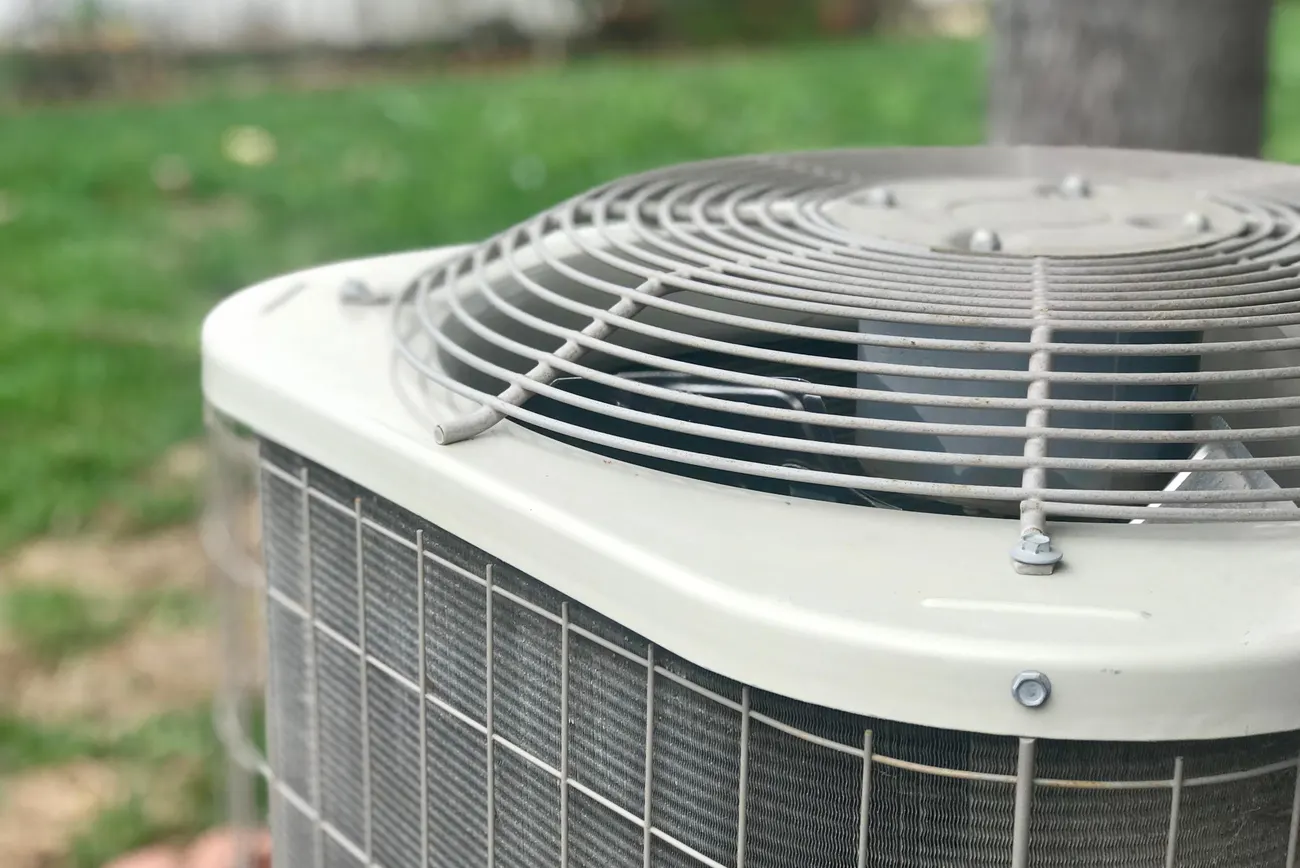
- Clear the outdoor unit. Cottonwood fluff, grass clippings, and mulch pile up against the coils and strangle the unit’s ability to shed heat. Give it a couple feet of breathing room and gently rinse the fins with a hose (power off).
If the house is still not keeping up after a fresh filter and a clean unit, and you are seeing any of the warning signs above, it is worth a look.
When it is worth a call in Northwest Indiana
A system that is low on refrigerant, has a failing capacitor, or is icing over will not fix itself, and pushing it through a heat wave in that condition tends to turn a small repair into a bigger one. If your AC is more than 12 to 15 years old and it is struggling every summer, it may also be a good moment to talk honestly about whether repair or replacement is the smarter money, especially before it fails on the hottest day of the year.
We have kept Northwest Indiana homes cool through a lot of July heat waves since 1963, and we answer our own phones. If your house is not keeping up and you are not sure whether it is the weather or the equipment, request a free estimate or call (219) 322-4649 and our service team will take a look.